The expenditure undertaken by government to provide things like transfer payments, public services and infrastructure.
In the context of measuring Aggregate Demand any expenditure relating to transfer payments is excluded.
Government spending is one of the key macroeconomic policy levers available to a government to control the business cycle. Increases in government spending cause an expansion in aggregate demand and decreases in government spending cause a reduction in aggregate demand.
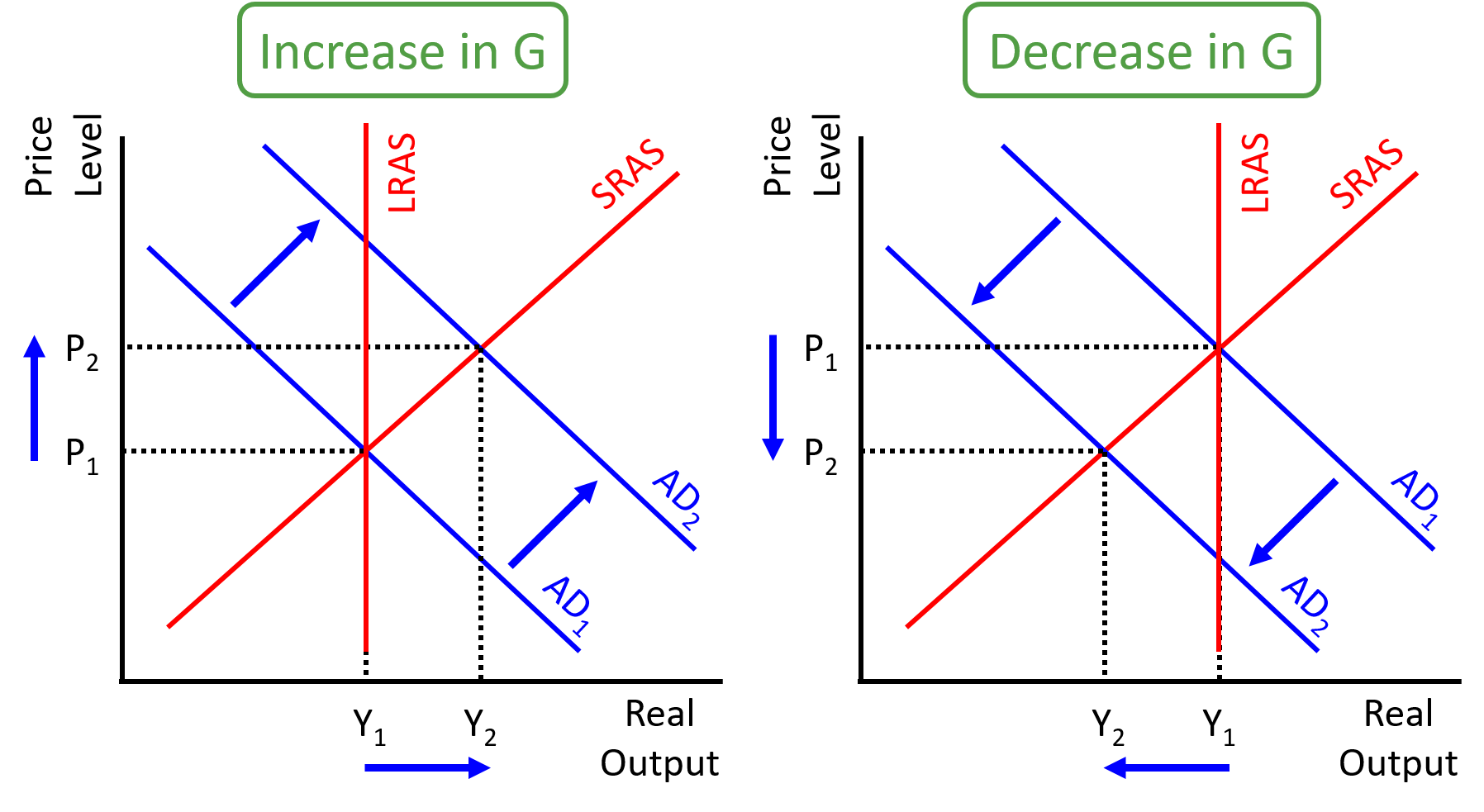
Keynesian economists argue that governments should be active in using government spending to impact the economy, in particular encouraging an increase in government spending during recessions. Classical economists are more wary of having too much government spending due to its potential effects to cause or increase a budget deficit.